

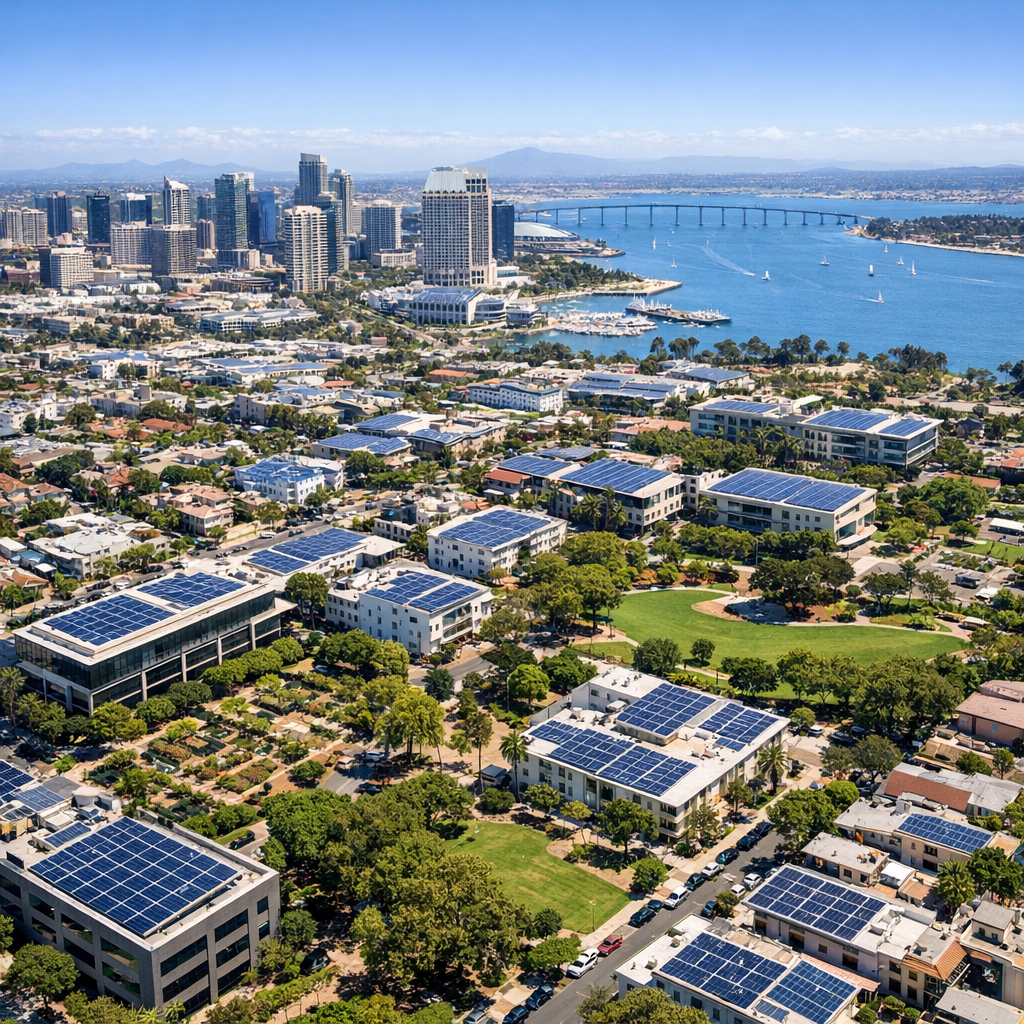
San Diego has long been recognized for its commitment to environmental sustainability. The city’s ambitious goal to achieve net-zero greenhouse gas emissions by 2035 underscores this dedication. However, recent reports indicate that while progress has been made, challenges remain in staying on track.
Current Emission Trends
In 2024, San Diego’s total emissions decreased by approximately 3% compared to the previous year. This reduction is primarily attributed to the increased adoption of clean electricity sources, such as solar and wind power, and a slight decline in natural gas usage in buildings. Despite this progress, emissions were still 6% higher than the target set to meet the 2035 goal.
Key Climate Initiatives
Several programs have been implemented to address these challenges:
Climate Action Plan
Launched in 2015 and updated in 2025, the Climate Action Plan outlines strategies to reduce emissions across various sectors, including transportation, energy, and waste management. The plan emphasizes equity, aiming to benefit all residents through new economic opportunities and improved urban spaces.
Climate Resilient SD
This initiative focuses on preparing communities for climate change impacts like extreme heat, wildfires, and sea-level rise. It lays the foundation for a greener and more resilient city, with particular attention to vulnerable communities.
Municipal Energy Strategy
Recognizing the significant role of municipal operations in emissions, this strategy aims to transition city buildings and vehicle fleets to renewable energy sources, setting an example for the broader community.
Community Engagement and Support
Local organizations play a crucial role in supporting the city’s climate goals. The San Diego Foundation’s Climate Initiative, for instance, has advanced 242 community-driven climate projects and funded 61 regional climate research studies as of February 2026. These efforts focus on reducing emissions, strengthening local preparedness, and protecting communities most affected by environmental changes.
Challenges Ahead
Despite these initiatives, San Diego faces several challenges:
- Infrastructure Investments: Upgrading infrastructure to support renewable energy and sustainable transportation requires significant funding and coordination.
- Community Participation: Achieving climate goals necessitates widespread community engagement and behavioral changes, which can be difficult to implement.
- Equity Considerations: Ensuring that climate initiatives benefit all residents, especially those in underserved communities, remains a priority and a challenge.
San Diego’s commitment to environmental sustainability is evident through its comprehensive plans and community-driven projects. While progress is being made, continued efforts and collaboration are essential to overcome the challenges and achieve the ambitious goal of carbon neutrality by 2035.